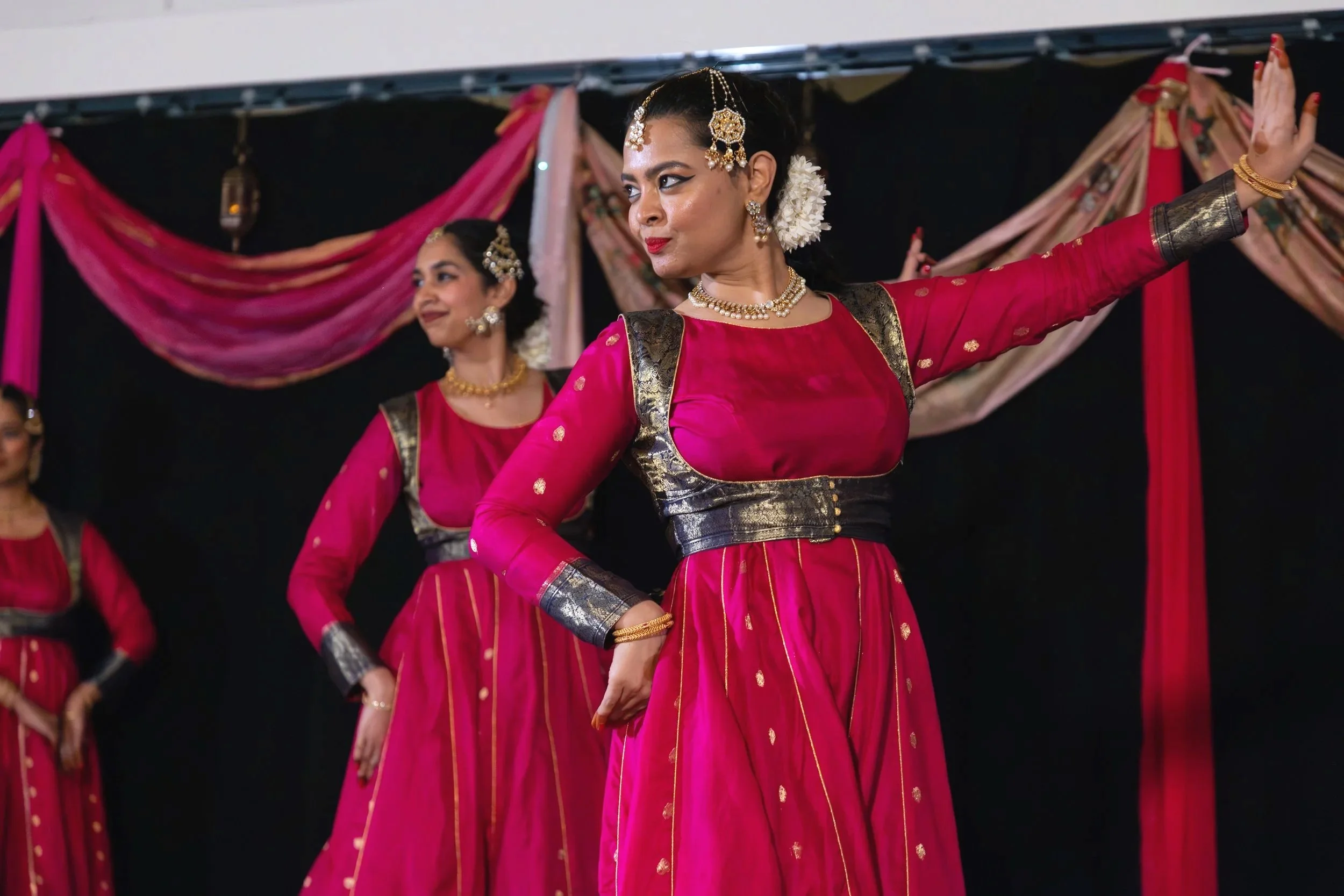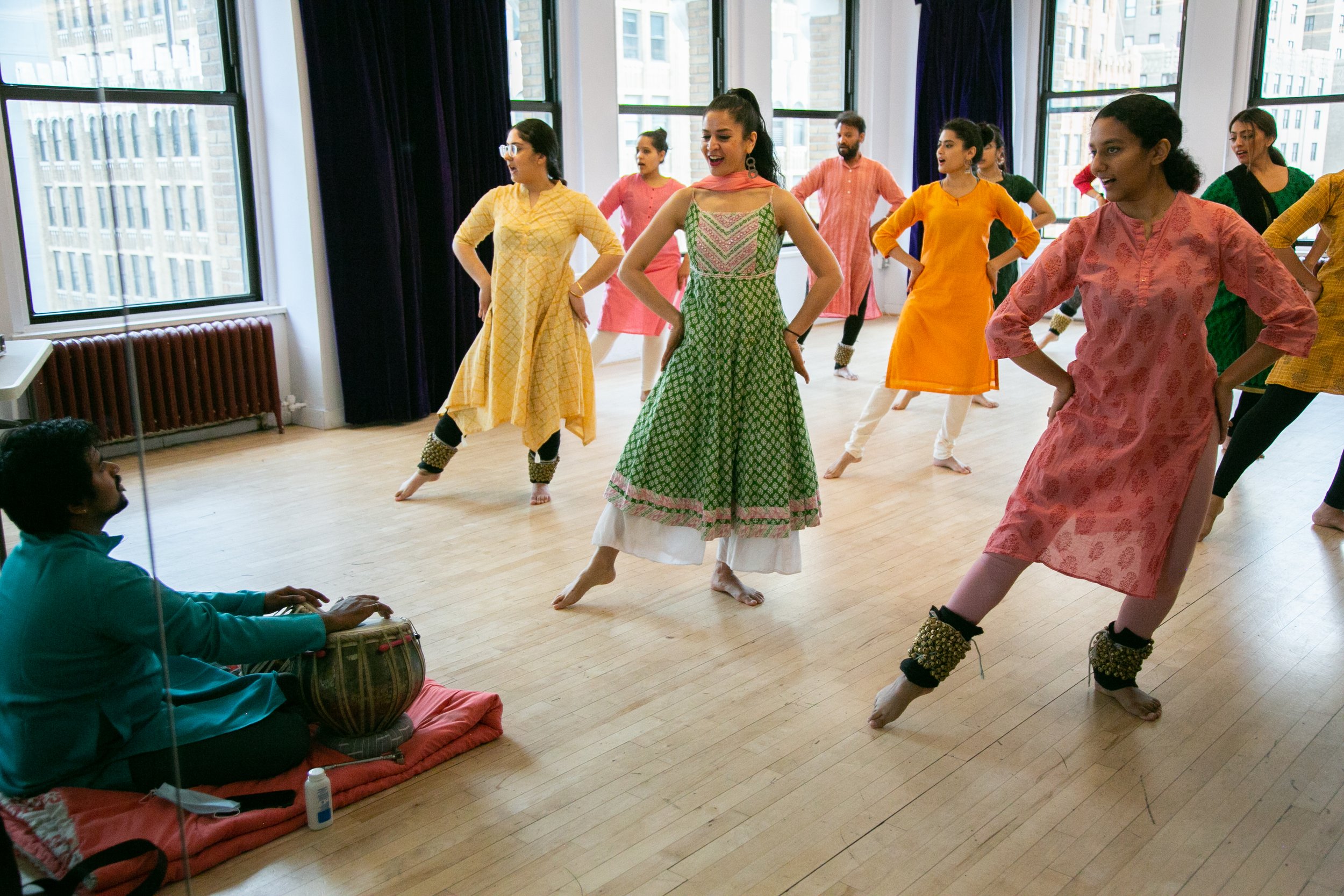
The Kathak Legacy Project by Rachna Nivas advances kathak, classical dance from North India, through rigorous training, mentorship, and lineage-rooted teaching. The project centers Indian classical dance and music as a source of cultural power, spiritual grounding, and artistic excellence, igniting creative expression, joy, pleasure, and freedom in diasporic contemporary life.
The Kathak Legacy Project
by Rachna Nivas
What the Project Does
Under the direction of Rachna Nivas, and rooted in the teachings of her guru, the late Pandit Chitresh Das, The Kathak Legacy Project is based in New York City and provides in-depth kathak education within a diasporic context through:
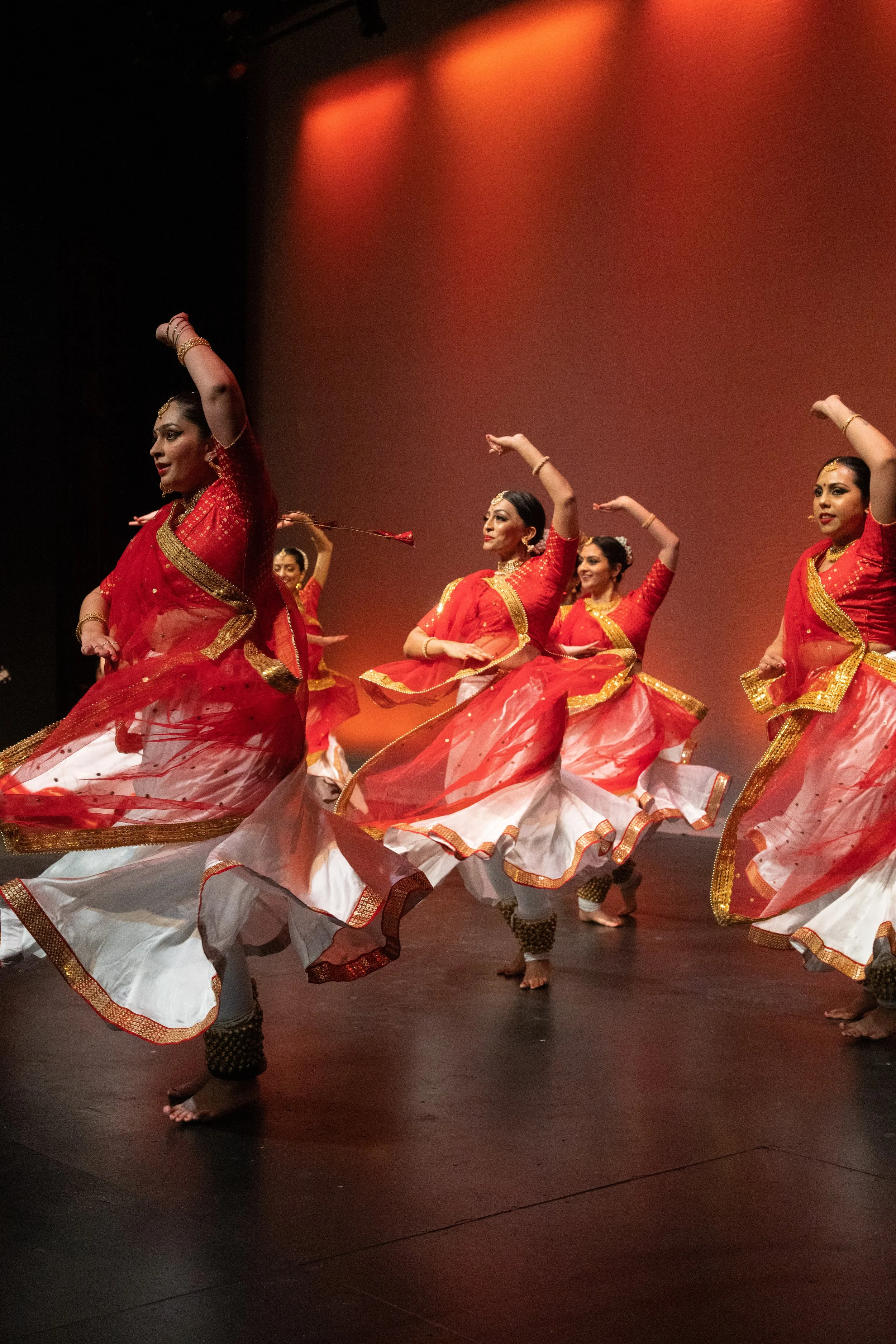
Kathak classes and Intensives centered on rhythmic knowledge (taal), technique and precision, physical rigor, expressive storytelling, North Indian Indian classical music, and comprehensive cultural and historical education
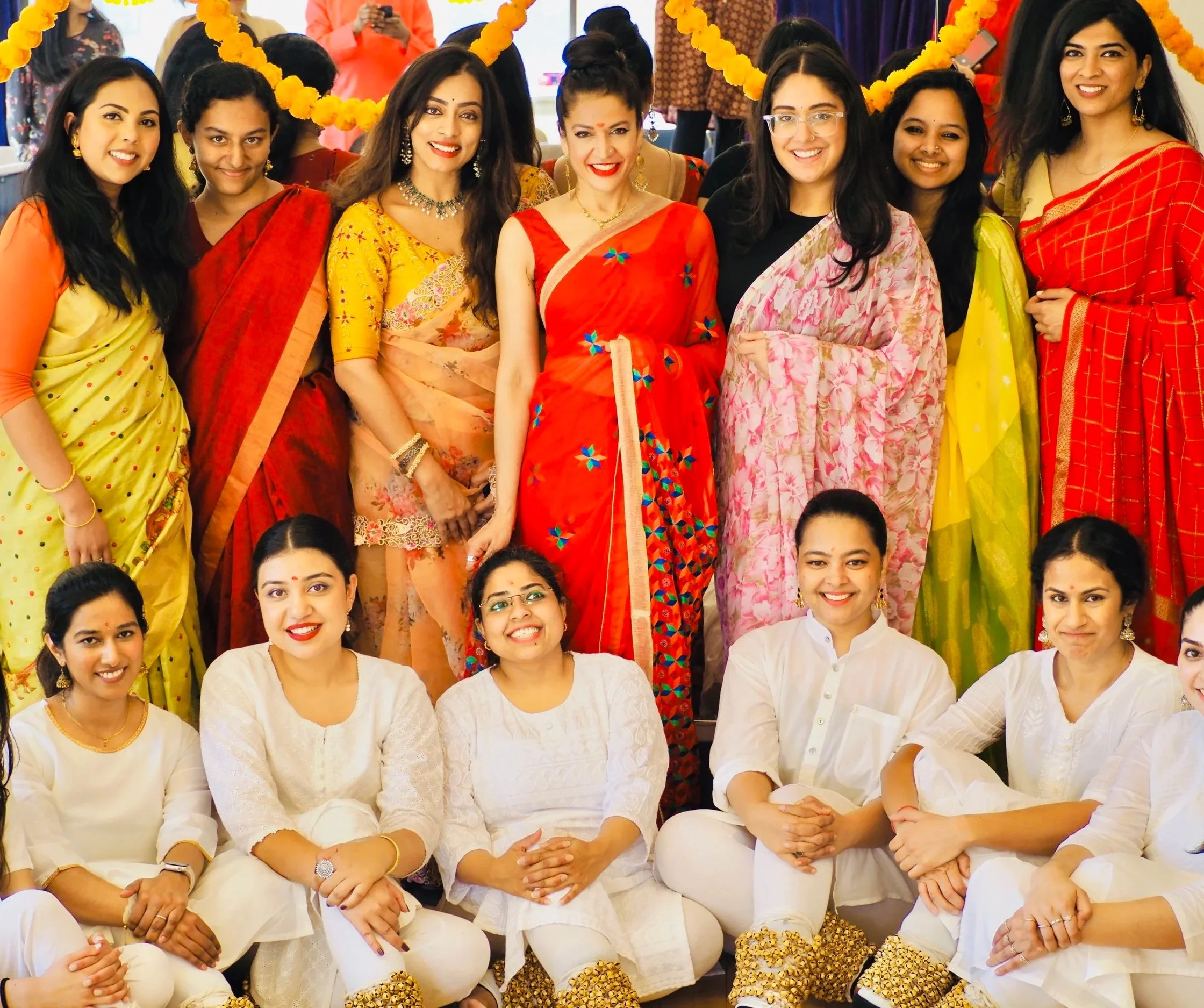
A committed learning community, where shared energy, cultural nuance, and human relationships create an immersive environment of excellence and elevation
Opportunities to train and perform with world-class musicians, reinforcing kathak’s inseparable relationship to live music and rhythmic dialogue
Pre-professional and professional performance pathways, supporting dancers as they move from studio practice into public performance contexts
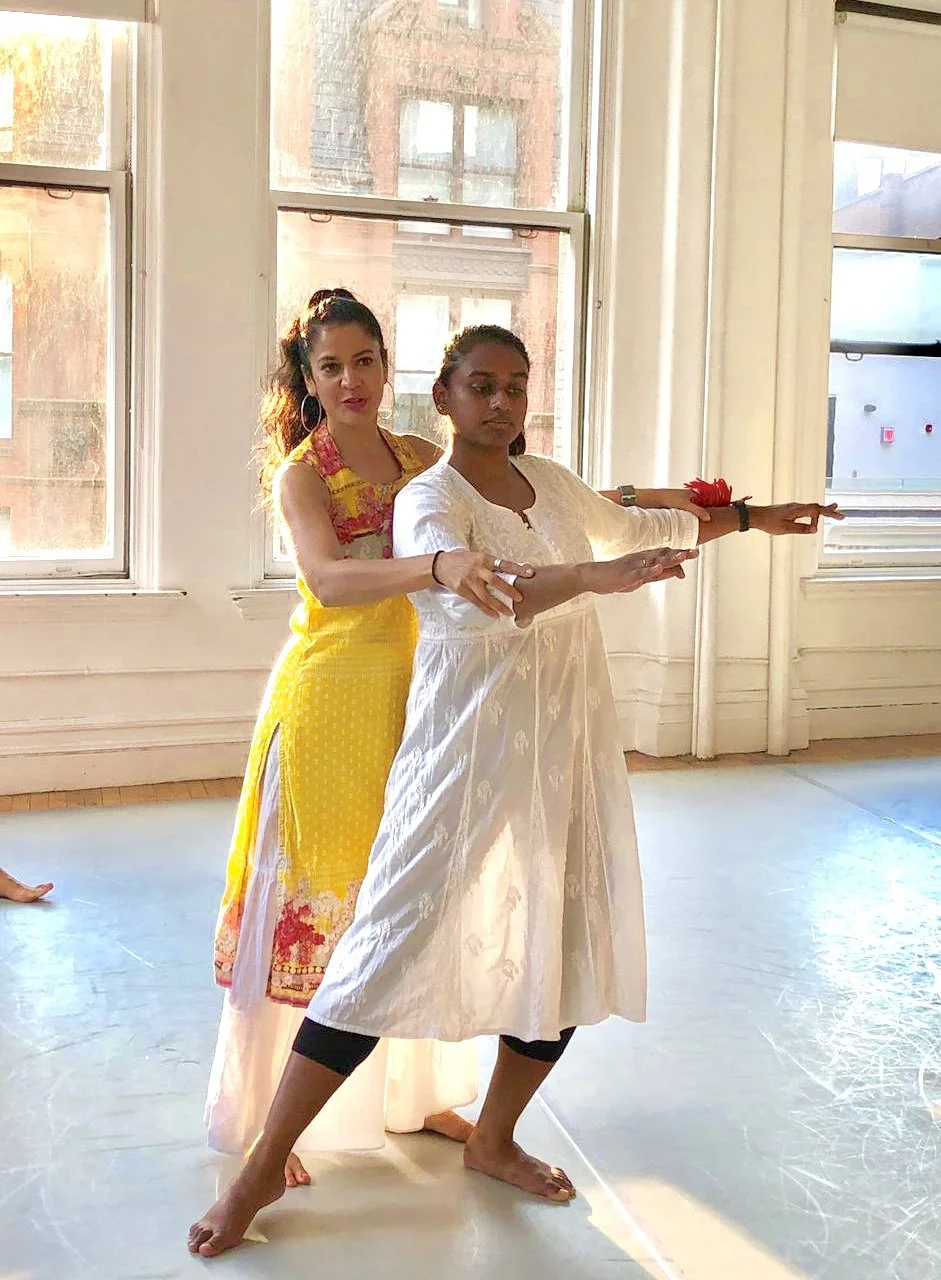
Long-term mentorship and teacher development, cultivating practitioners to teach this style, philosophy and technique of kathak through developed pedagogical practices
Cultivation of leadership in performing arts , equipping students with a broad spectrum of skills in production, events, community convening, and arts advocacy—preparing them to become not only dancers, but leaders and cultural ambassadors
Why Legacy
.
Legacy is often seen as something fixed or inherited. But at The Kathak Legacy Project by Rachna Nivas, legacy is understood as the continuum of a living practice—past, present, and future. As Nivas states:
“The knowledge of Indian classical art cannot belong to any one individual. It is a living lineage, shaped and carried by cultural keepers over centuries. It only survives through human transmission, uncompromised practice, responsibility, and the courage and steadfastness to uphold its true spirit amid social and cultural evolution.”
For this continuum to exist within an art form as rich and nuanced as kathak, thoughtful stewardship is essential. Without care, traditions like kathak, particularly as non-Western classical forms, are vulnerable to flattening, absorbed into dominant Western mass culture in ways that dilute depth, context, and artistic rigor. Kathak’s standards were preserved primarily through lineage-based oral transmission rather than centralized institutional codification, following the disenfranchisement of Indian classical traditions under British rule.
Active custodianship of kathak, an art form birthed and developed in the Indian subcontinent and now shared globally, creates a container for both continuity and creative contribution. In this sense, legacy is not about preservation alone, but about care: allowing the tradition to remain alive, potent, and meaningful as it moves forward through generations.
Our Living Lineage


As an oral tradition, kathak is a nuanced craft and way of life, much like martial arts, that relies on masters to transmit embodied knowledge. As a vernacular form, it is necessarily taught through guru–shishya parampara (master–apprentice discipleship), a centuries-old system of mentorship in which knowledge is passed through long-term relationship, lived practice, and responsibility.
Legendary kathak master Pandit Chitresh Das comes from a long line of lineage bearers of the Lucknow gharana of kathak. His guru, Sri Ram Narayan Misra, and his father, Prahlad Das, were disciples of the great Shambhu and Achhan Maharaj. Carrying his guru’s intensive and all-encompassing approach to training, Pandit Das brought kathak to the United States in 1970. Over the next four and a half decades, he trained multiple generations of students and disciples, evolving the tradition to meet modern contexts while preserving its rigor and spirit.
Rachna Nivas emerged from this lineage through years of intensive study and close mentorship, later serving as an appointed Director of the Chhandam School of Kathak from 2010 to 2016. Her work is now also shaped by mentorship and rigorous practice—centering creative agency, musical dialogue, and embodied knowledge. These values continue to guide how kathak is taught and carried forward through The Kathak Legacy Project today.
The Kathak Legacy Project serves as the first center in New York City dedicated to training and education in Pandit Das’s extraordinary style and approach—carrying the lineage forward as a living, evolving practice grounded in mentorship and diasporic life.
Highlighting Kathak’s syncretic roots, shaped by Hindu and Muslim artistic, devotional, and courtly traditions, are also fundamental to The Legacy Project's approach. Nivas consistently foregrounds this shared cultural inheritance, positioning kathak as a singular space of harmony, shared history and land, at a time when communities are often divided. Across her choreography, pedagogy, and community leadership, Nivas treats lineage as something carried forward through presence, relationship, and lived practice—ensuring that kathak remains responsive, interconnected, and deeply alive within diasporic cultural life.
Rachna Nivas’s approach to lineage is shaped by a diasporic experience that sits at the intersection of East and West. Raised by trailblazing South Asian immigrants who planted cultural roots in the United States in the wake of San Francisco’s 1960s countercultural movement, she inherited both India’s rich artistic traditions and the complexities of a post-colonial reality. With a family history rooted in activism against British rule and caste oppression, inquiry of ownership, responsibility, and decolonization have always been central to her work.
Within this context, kathak becomes more than a classical form—it becomes a site of resistance, reclamation, and humanity. Nivas’s work as an educator is driven by engendering pride in Indian classical art, and by a commitment to protecting its historical, philosophical, physical, and spiritual depth, while refusing its exotification under Western frameworks. Central to this work is the elevation of feminine consciousness and ancient matriarchal concepts embedded within Indic civilization that challenge rigid gender binaries and are expressed through the body, rhythm, and storytelling.