Training in New York
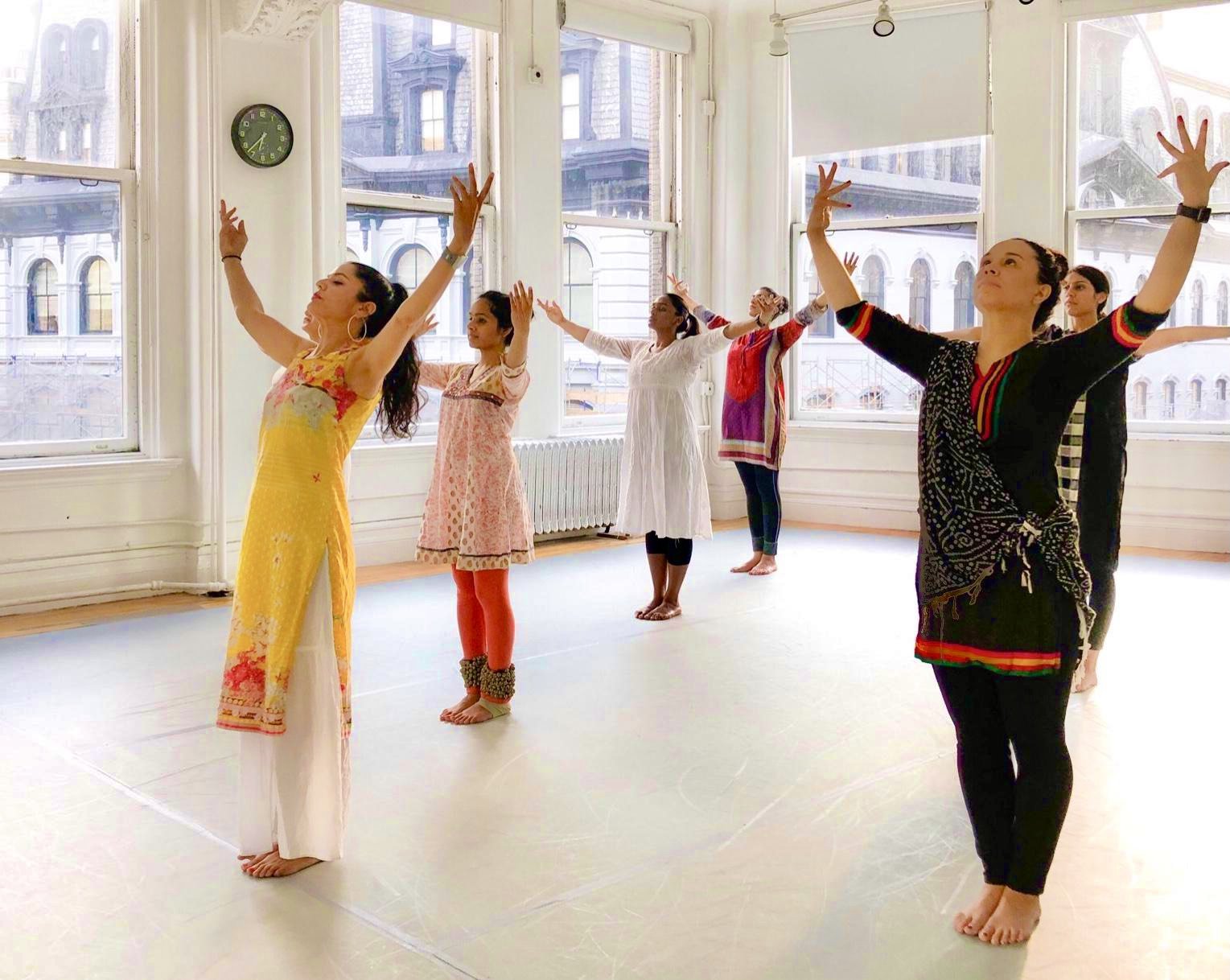
Training at The Kathak Legacy Project by Rachna Nivas carries forward the renowned style and pedagogy of the late Pandit Chitresh Das, stewarded and advanced by acclaimed kathak artist and educator Rachna Nivas through rigorous classical study rooted in rhythmic intelligence, oral transmission, and expansive creative freedom.
→ Learn more about our philosophy and lineage
Fall Session 2026
Session Dates: September 9- December 6
Accepting New Students
Sundays | 11:00AM-12:00PM
Gibney Downtown || 280 Broadway • Entrance at 53A Chambers
Wednesdays | 6:00-7:00PM
Ripley-Grier Studios || 520 8th Ave
Pricing:
$450, Semester Pass
Join us in creating community, learning this longstanding art, and celebrating form, this fall
For New Students -
Students begin their kathak journey with an introduction to the basic technique of kathak dance including footwork (tatkar), pirouettes (chakkar), hand gestures and stances, and movement patterns, concepts of taal and raga - the rhythmic and melodic systems of Indian classical music and dance - and the history, philosophy and cultural context surrounding the dance form.
Prior Students -
Rekindle your passion for Kathak this fall! Whether you're a returning student or looking to refine your skills, our classes will help you deepen your understanding of this beautiful art form. Building on a strong foundation of rhythm, movement, and grace, you'll focus on enhancing your tayari - speed, stamina, and technical precision - while expanding your vocabulary of Kathak.
Challenge yourself with:
- Advanced footwork patterns (tatkar) and intricate rhythmic compositions
- Faster and multiple chakkars (pirouettes) with emphasis on clarity and control
- Complex movement sequences that integrate energy, posture, and line
Sign Up for a Trial Class!
Questions?
Email us: KathakLegacyProject@rachnanivas.dance
Class Experience and Levels
.
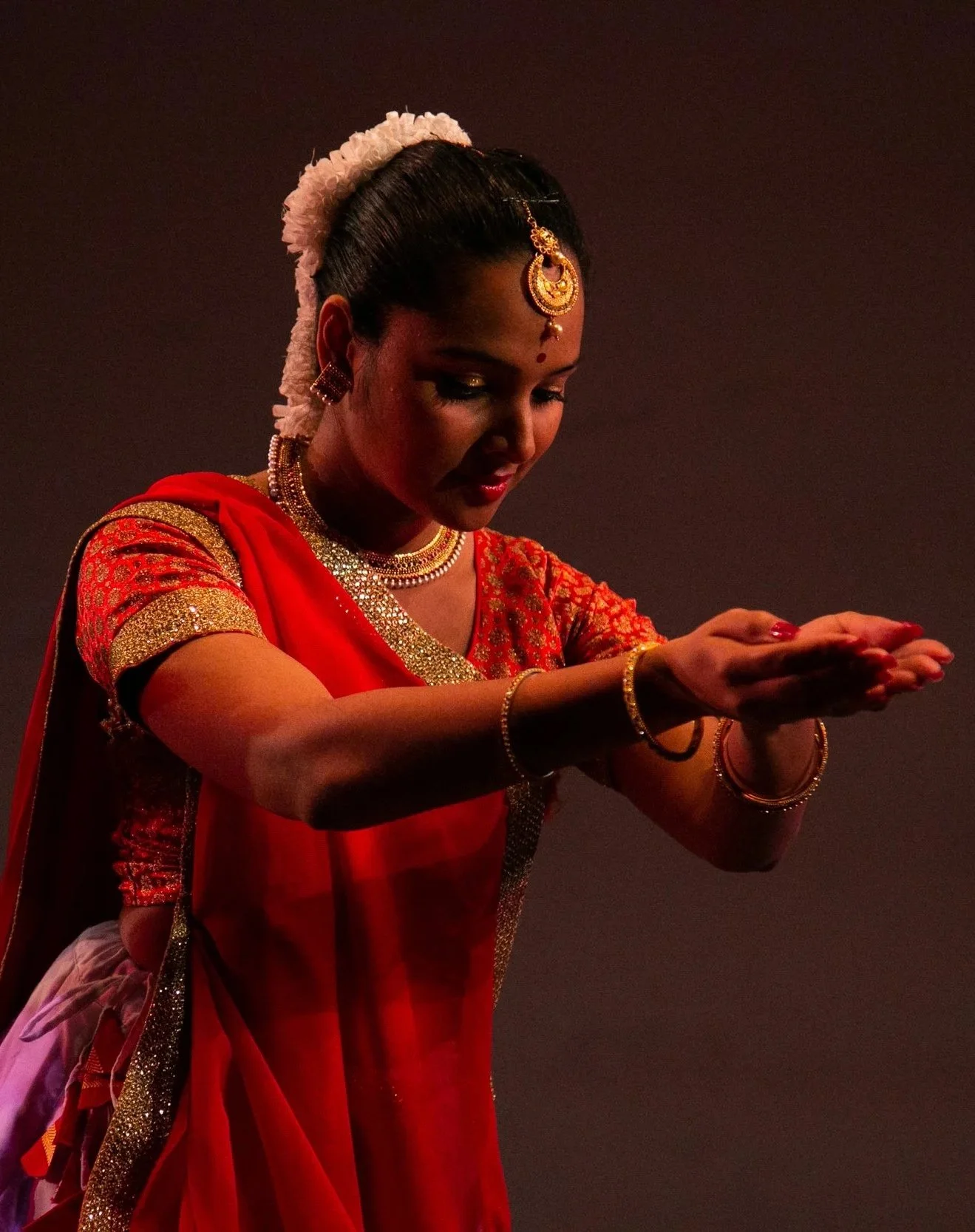
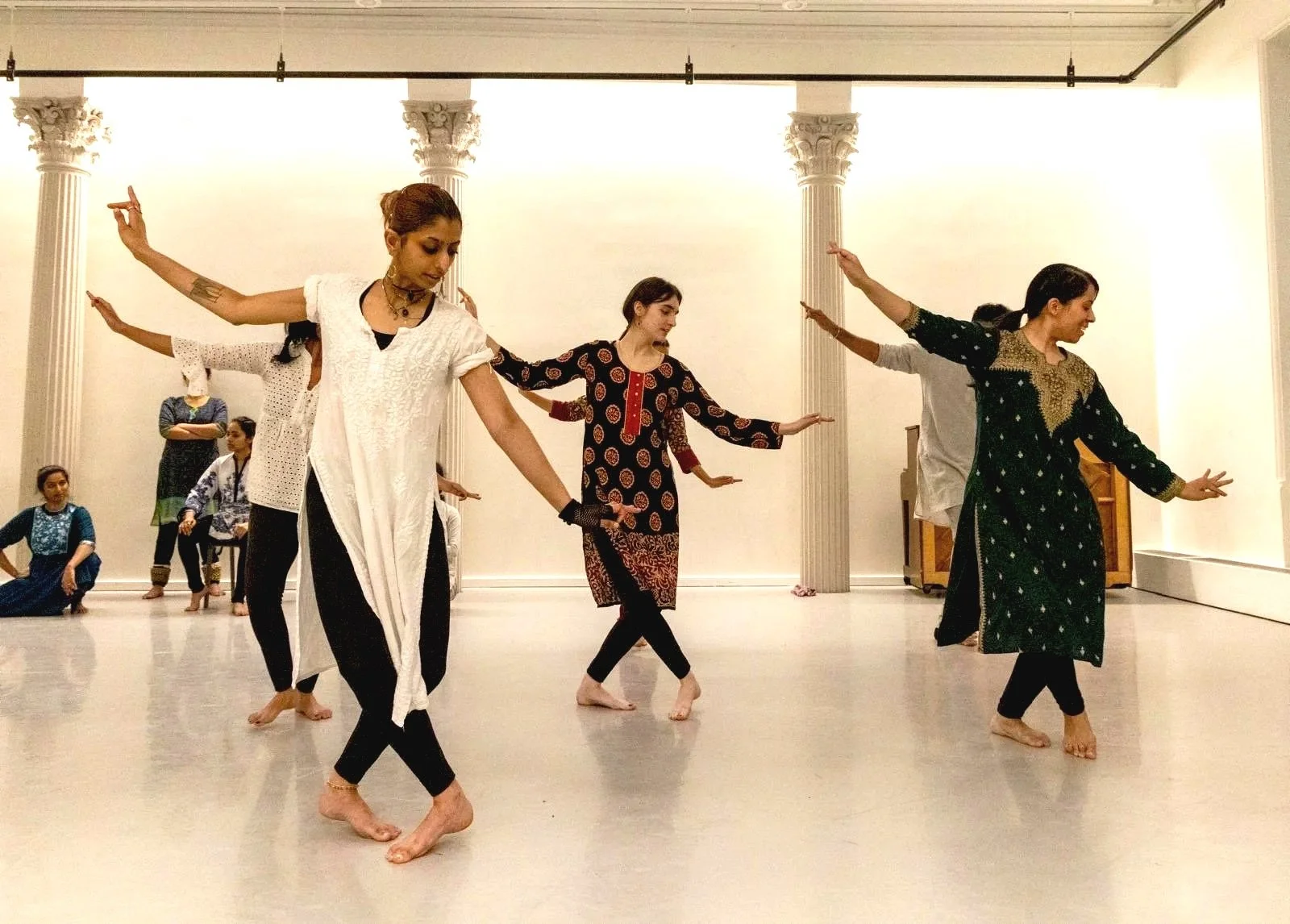
Kathak classes at The Kathak Legacy Project are immersive, demanding, and transformative. Our lineage and style is rooted in the Lucknow gharana, influenced by Jaipur gharana, and evolved through what has emerged as the California gharana developed by Pandit Chitresh Das over five decades.
Training in our classes unfolds through intensity and precision—footwork, rhythmic play, recitation, poetry, and singing—awakening a powerful connection between body, rhythm, beauty, and feeling. The practice invites dancers to cultivate presence, confidence, and a deeper relationship to the self through the medium of kathak and its essential dimensions:
tayari - technical readiness, precision, speed, and endurance
layakari - virtuosity of rhythm and timing
khubsurti - beauty and grace
nazakat - delicacy and subtlety
abhinaya - expressive storytelling
Training is offered at the introductory level as well as intermediate and advanced stages. Students with prior kathak training must attend the introductory class as kathak styles vary substantially between schools and guru. It is important to ground oneself in our philosophy and approach before being acclerated to higher levels.
Teaching Artists
Rachna Nivas — Founder & Artistic Director
Neeharika Tummala — Associate Kathak Instructor
Programs and Pathways
.
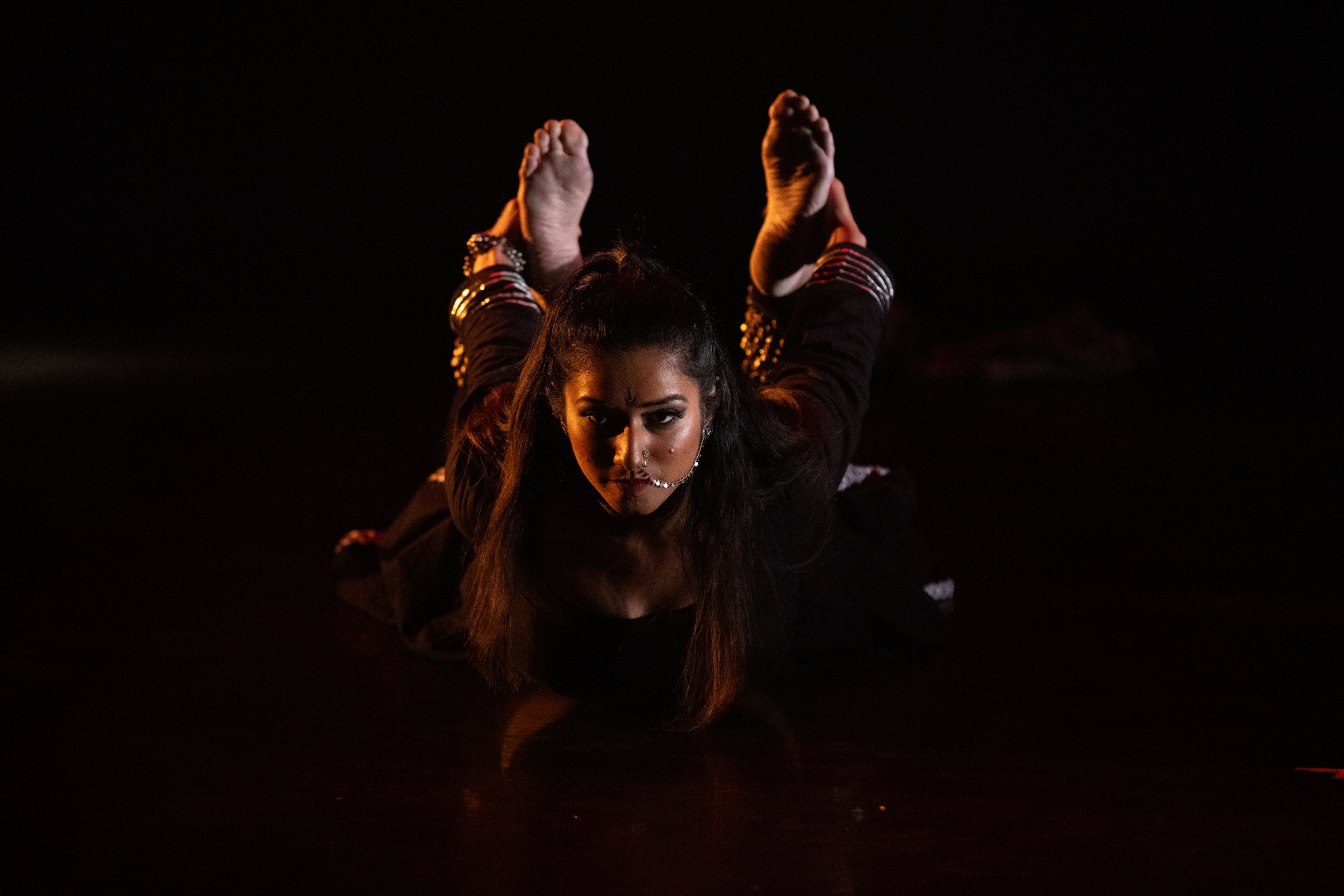
Progams at The Kathak Legacy Project support dancers at multiple stages of study, offering clear pathways for deepening engagement over time:
Open Classes
Ongoing kathak classes open to students of all backgrounds, centered on technique, rhythm, movement vocabulary, and expressive practice.Accelerated Study
A faster-paced, more demanding track for students pursuing intensified training, expanded vocabulary, and a higher level of focus and commitment.Pre-Professional Training
Advanced study for dancers preparing to move from studio practice into public performance, including repertoire development and community presentations.Teacher Development
A structured apprenticeship integrating pedagogical training, teaching practicums, and mentorship, designed to cultivate kathak artists as educators, cultural ambassadors, and community leaders.Professional Training & Apprenticeship
Ongoing mentorship and advanced practice for professional dancers committed to sustained artistic growth, performance, and lineage-based study.
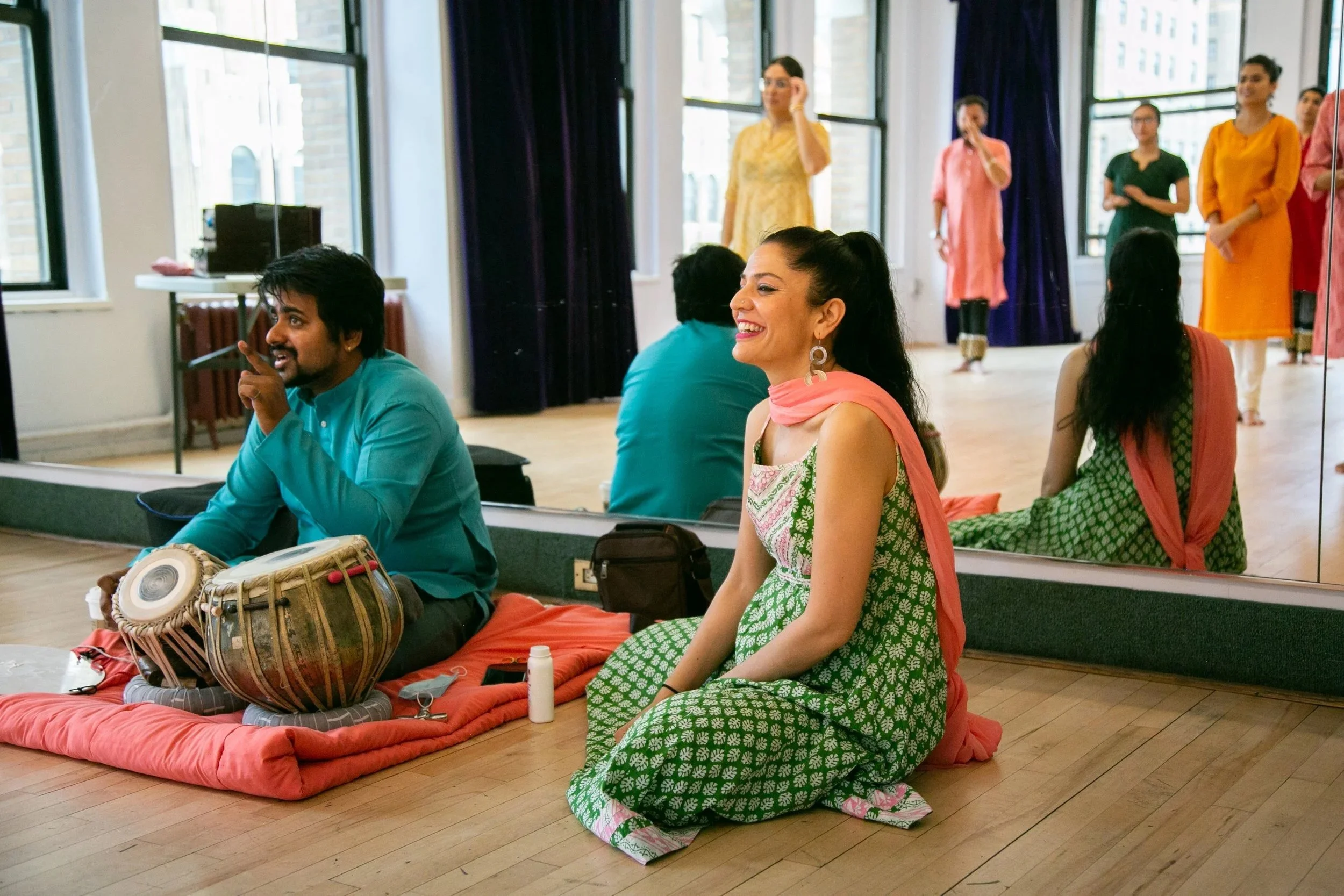
Thank you to our funders
The Kathak Legacy Project by Rachna Nivas community, educational and training programs are proud to be supported by Harkness Foundation for Dance and, also made possible by the New York State Council on the Arts with the support of the Office of the Governor and the New York State Legislature.